How It Works
One play at a time, grounded in evidence.
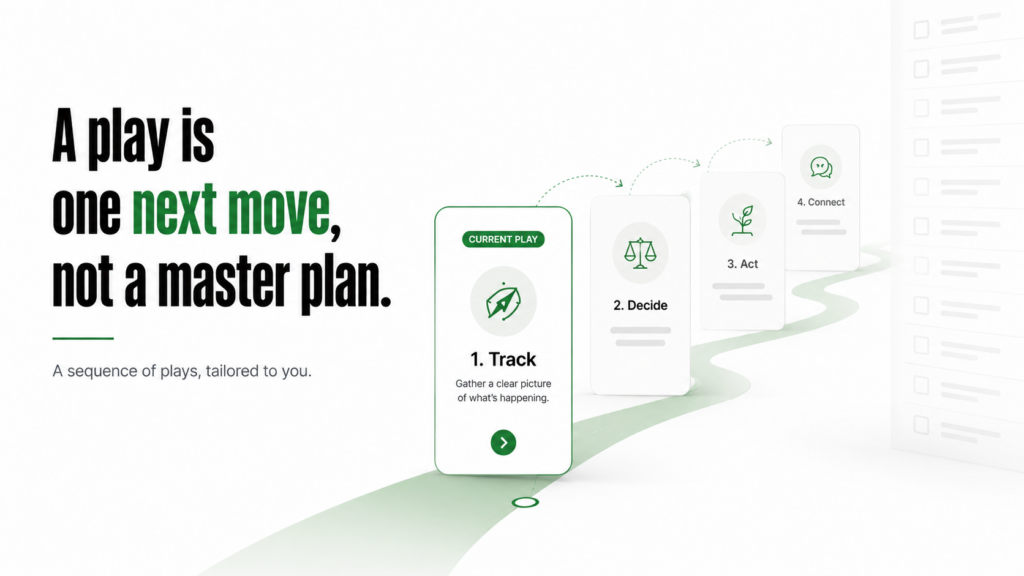
A play is one next move, not a master plan.
The Playbook is a sequence of plays.
A play is a single, named, next move tailored to your situation. Some plays are about tracking something specific. Some frame a decision you’ll bring to your care team. Some suggest a practical intervention. Some are conversations worth having with the people around you.
We don’t hand you a 40-item checklist on day one. We hand you the play that fits where you are right now, and the few that are likely to come after it.
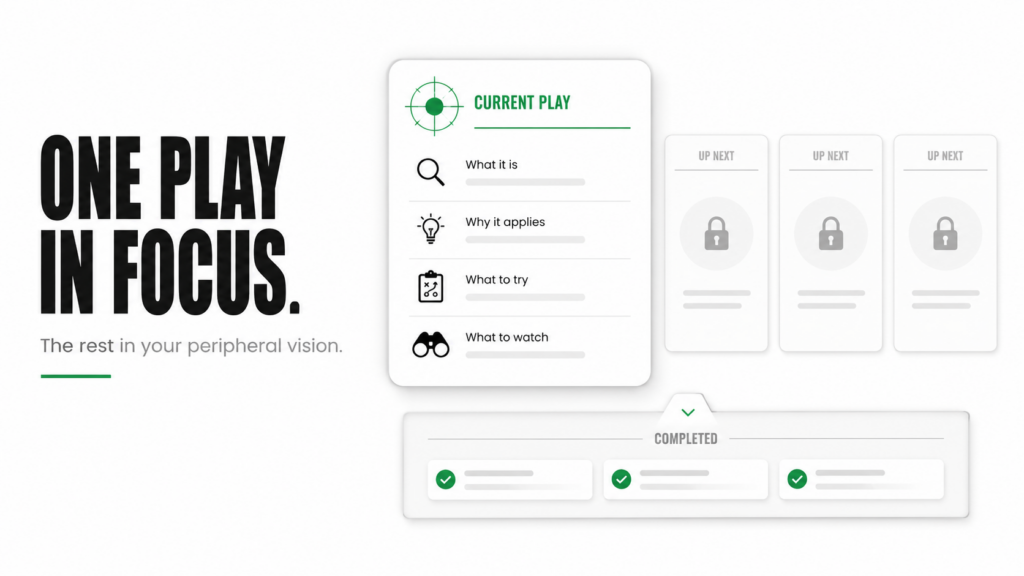
One play in focus. The rest in your peripheral vision.
One play at a time, plus what’s likely next.
Your dashboard shows one current play in full detail — what it is, why it might apply to you, what to try, and what to watch for. A small set of possible next plays appear as locked tiles, so you can see where the path might go without being overwhelmed by it.
Plays you’ve completed live in a drawer you can revisit any time. Nothing disappears.
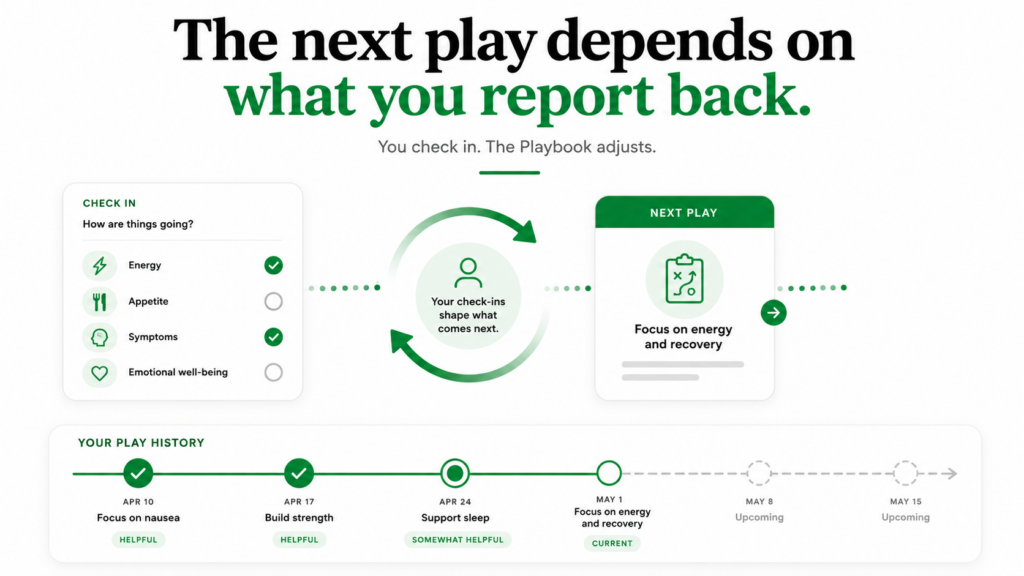
The next play depends on what you report back.
You check in. The Playbook adjusts.
After you try something, we ask you how it went. Did it help? Did anything change? Did you talk to your care team? Your check-ins shape the next play we surface.
Over weeks and months, the Playbook becomes a record of what you tried and what it felt like — useful to you, and (with your permission) useful to patients who come after you.
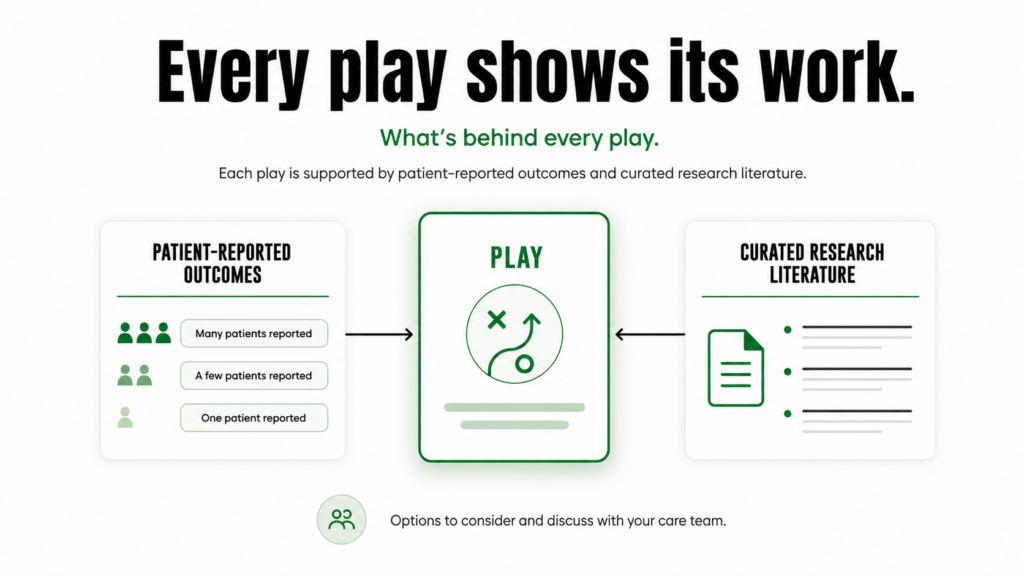
Every play shows its work.
What’s behind every play.
Each play is supported by two evidence layers: what other patients in similar situations reported, and what the curated research literature says. We count-gate our framing — “many patients reported,” “a few patients reported,” or “one patient reported” — so you can weight it accordingly.
No play is a recommendation. Plays are options, framed honestly, for you to consider and discuss with your care team.
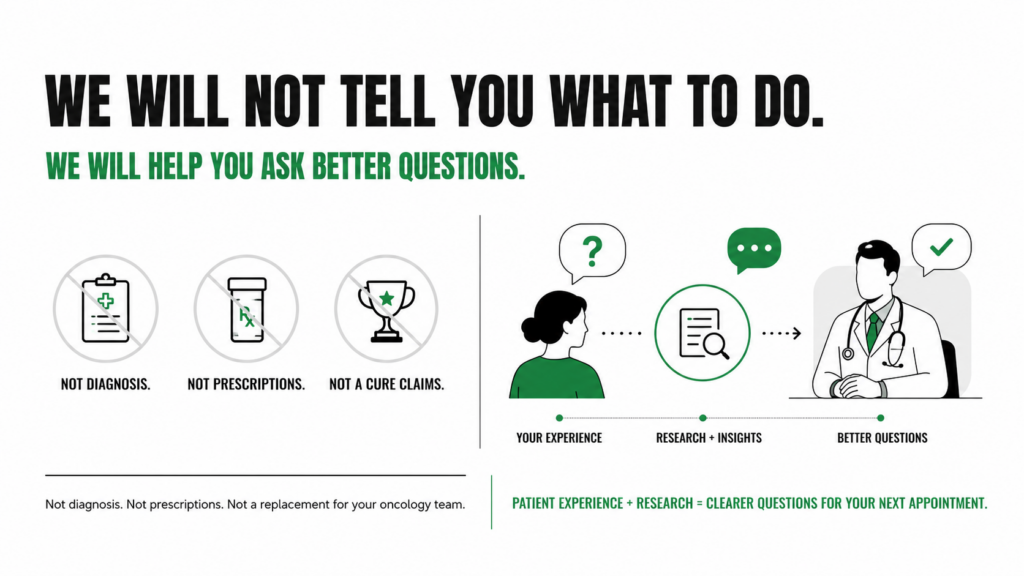
We will not tell you what to do. We will help you ask better questions.
What the Playbook will not do.
It will not diagnose you. It will not prescribe anything. It will not promise that any intervention — cannabis, supplement, diet, or otherwise — will cure cancer or change your prognosis. It will not replace your oncology team.
What it will do is organize patient experience and research so you can walk into your next appointment with sharper questions and a clearer sense of your options.